
Most people walk into the Sistine Chapel expecting a moment of quiet contemplation and walk out having been hushed by a guard, jostled by a tour group, and swept through a room smaller than they imagined before they had time to understand what they were looking at. This Sistine Chapel guide exists so that does not happen to you!
Sistine Chapel Guide: The Basics
What it is: The final room of the Vatican Museums route
Time needed: 20 to 30 minutes in the chapel, 2 to 3 hours total including the museums
No photos: Strictly enforced. Guards will ask you to delete images
No talking above a whisper: This is an active place of worship
Best time to visit: First slot of the day or early afternoon on a weekday
Best for seeing it properly: Early Morning Vatican Tour
What Michelangelo Actually Painted
Most visitors walk in knowing about the ceiling and leave without realizing there are two entirely different works by Michelangelo in the same room, painted more than two decades apart, in completely different emotional registers.
The Ceiling: Genesis from Creation to Noah
The ceiling was painted between 1508 and 1512, completed in less than four years. Originally the Pope had asked for the twelve apostles to be painted. Michelangelo got his way and depicted the Old Testament instead.
Michelangelo filled the central spine of the long curved ceiling with nine scenes from Genesis: three depicting the Creation of the World, three stories of Adam and Eve, and three stories of Noah. Around the edges, he placed prophets and sibyls, ancient seers from both the Jewish and classical traditions, and above the windows, the ancestors of Christ.
The Creation of Adam, showing God’s finger almost touching Adam’s, is the image most visitors come for. It sits near the centre of the ceiling, slightly toward the altar end. Most visitors look for it from the wrong side of the room.

How to read the ceiling correctly: The narrative runs from the altar end toward the entrance. Start at the altar wall, look up, and work your way backwards toward the door. The Creation scenes are above the altar. Noah is above the entrance.
What this means practically: do not try to see everything. Pick three things to look for and find them.
- The Creation of Adam near the centre of the ceiling, slightly toward the altar end
- The prophet Jonah above the altar, twisting dramatically against the architectural frame
- The Libyan Sibyl to the right of Jonah, one of Michelangelo’s most celebrated individual figures
Finding those three will make the visit feel intentional rather than overwhelming.
The Last Judgment: The Altar Wall
The ceiling tells the story of how the world began. The altar wall tells the story of how it ends. Stand in the middle of the room and you have both at the same time, Genesis behind you, the Last Judgment in front of you.
The Last Judgment is a depiction of the Second Coming of Christ and the final and eternal judgment by God of all humanity. The dead rise and descend to their fates, as judged by Christ who is surrounded by prominent saints. Altogether there are over 300 figures. The fresco covers the entire altar wall, 13.7 metres high and 12 metres wide.
At the center stands Christ, depicted not as the gentle shepherd of medieval tradition, but as a powerful judge raising his right arm in a stern gesture of condemnation. Beside him, in quiet reverence, stands the Virgin Mary.
Michelangelo painted The Last Judgment between 1536 and 1541, when he was nearly 67 years old. He was no longer the youthful, athletic artist who painted the vault; he was an aging man, deeply devout, grieving the loss of loved ones, and troubled by the spiritual upheaval of the Protestant Reformation. All of this emotional weight flows onto the wall, giving it a tone far less triumphant and noticeably more tormented than the ceiling above.
Start with The Last Judgment when you enter. It is at eye level, easier to read, and the ceiling gets all the attention. Give it five minutes before you crane your neck.
Why It Takes Years to Fully Read
The ceiling contains over 300 individual figures across nine narrative scenes, twelve prophets and sibyls, twenty nude youths called ignudi, and forty ancestors of Christ in the lunettes above the windows. Art historians have spent careers reading it. You have twenty minutes. The ceiling will not reveal itself. You have to go looking.
What First-Time Visitors Most Often Miss
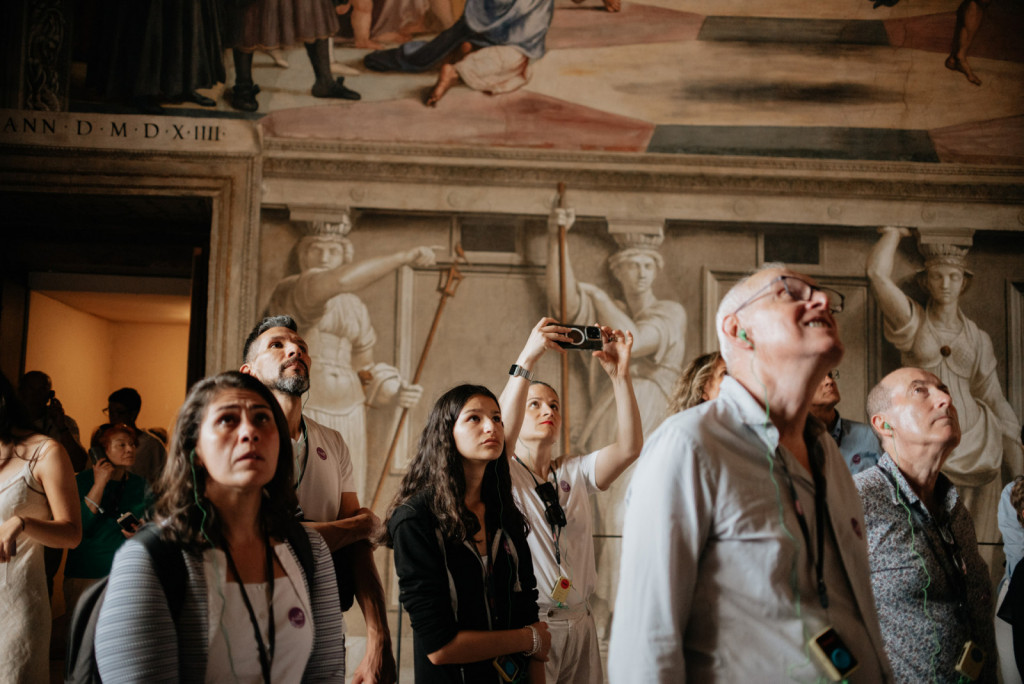
- The room is smaller than you expect. The Sistine Chapel is 40 metres long and 13 metres wide, approximately the size of a large school gymnasium. When it is full of visitors it feels considerably smaller.
- The walls are also painted. Before Michelangelo touched the ceiling, the walls were decorated by Botticelli, Ghirlandaio, and Perugino. The cycle of paintings showing the life of Moses and the life of Christ is extraordinary in its own right and almost entirely ignored.
- The Creation of Adam is not at the centre of the ceiling. It is slightly toward the altar end. Walk further into the room before you look up.
- Sit down. Head straight to a side bench when you enter. The center is a bottleneck. Start with The Last Judgment at eye level, then work up to the ceiling from the altar end toward the entrance. Give it 20 minutes minimum.
- The exit on the right leads to St. Peter’s Basilica. If your tour includes the basilica, take the right-side exit. It leads through the Pope’s private passageway directly into St. Peter’s, bypassing the public queue entirely.
Sistine Chapel Guide: The Rules
The Sistine Chapel is a sacred space and one of the busiest rooms on the planet. Because it still hosts major papal ceremonies, the Vatican treats it with extra formality.
- Photography: Strictly forbidden inside the chapel. This applies to all photography including phones, even without flash. Guards are consistent. Do not test them.
- Silence: Guards announce SILENZIO regularly. Talking above a whisper will get you called out in front of several hundred people.
- Dress code: Shoulders and knees must be covered. Enforced at the Vatican Museums entrance. Hats and caps must be removed inside the chapel.
- Movement: The chapel operates under crowd flow conditions. Head straight to a side bench. The center is a bottleneck.
How It Fits Into the Vatican Museums Route
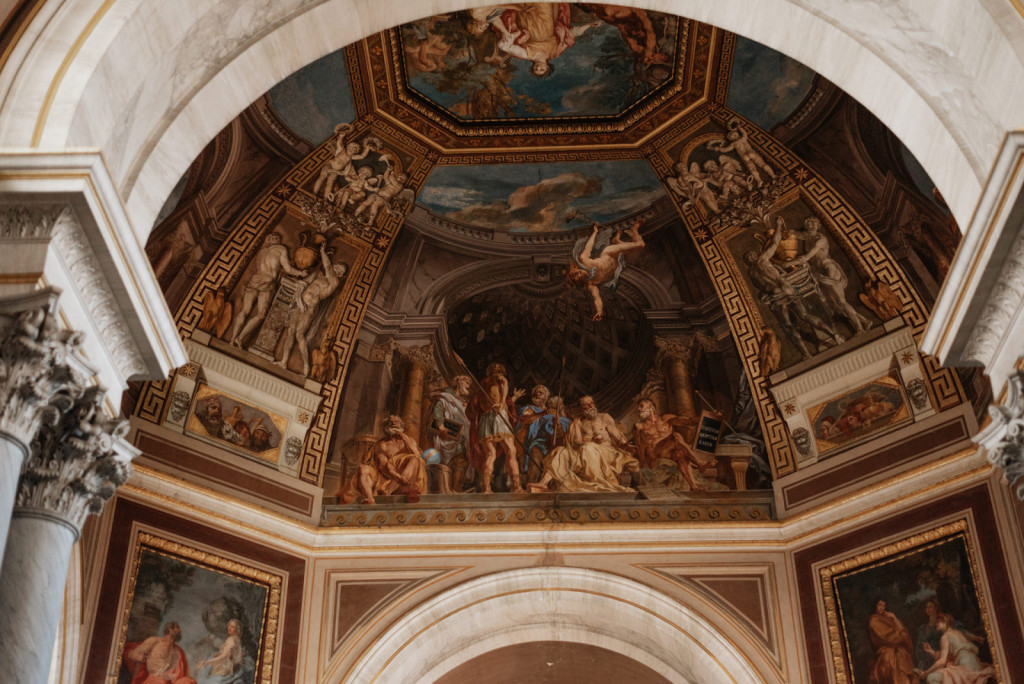
You cannot buy a ticket to just the Sistine Chapel. Visiting means entering the Vatican Museums, a 7-kilometre route through galleries containing Egyptian artifacts, classical sculptures, Renaissance tapestries, and the Raphael Rooms. The Sistine Chapel is the final room at the end of this route.
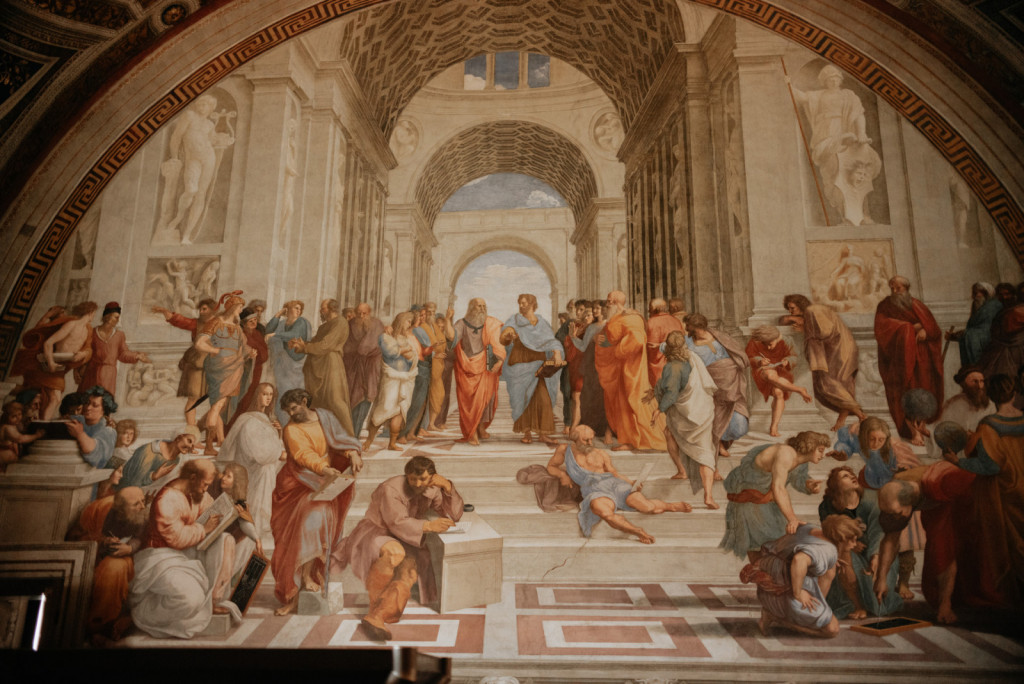
The Raphael Rooms, four chambers painted almost entirely by Raphael between 1508 and 1524, are two rooms before the chapel. Most visitors rush through them. The School of Athens alone, depicting every major Greek philosopher gathered in one imagined building, deserves ten minutes of your time.
For everything you need to plan your full Vatican visit, see our guide to planning your full Vatican visit.
When to Go and Whether Early Morning Is Worth It
The best time to visit the Sistine Chapel is 8am at opening, around 1pm on weekdays, or late afternoon after 4pm for fewer crowds. Avoid the last Sunday of the month, Saturdays in high season, and Wednesdays when the Pope holds his general audience.
Is the Early Morning Tour Worth It?
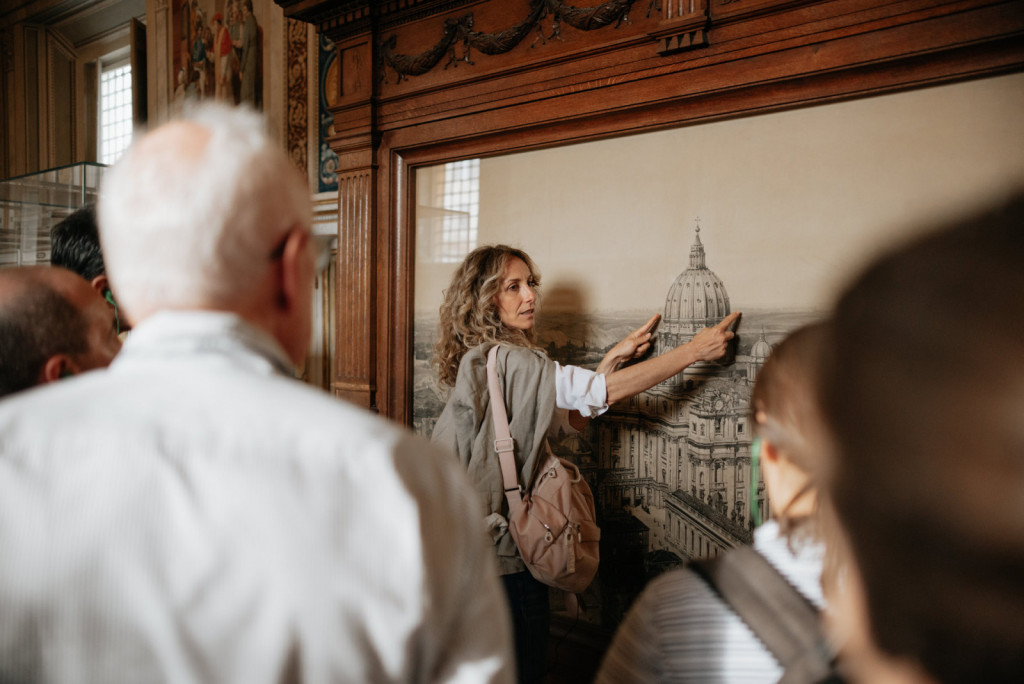
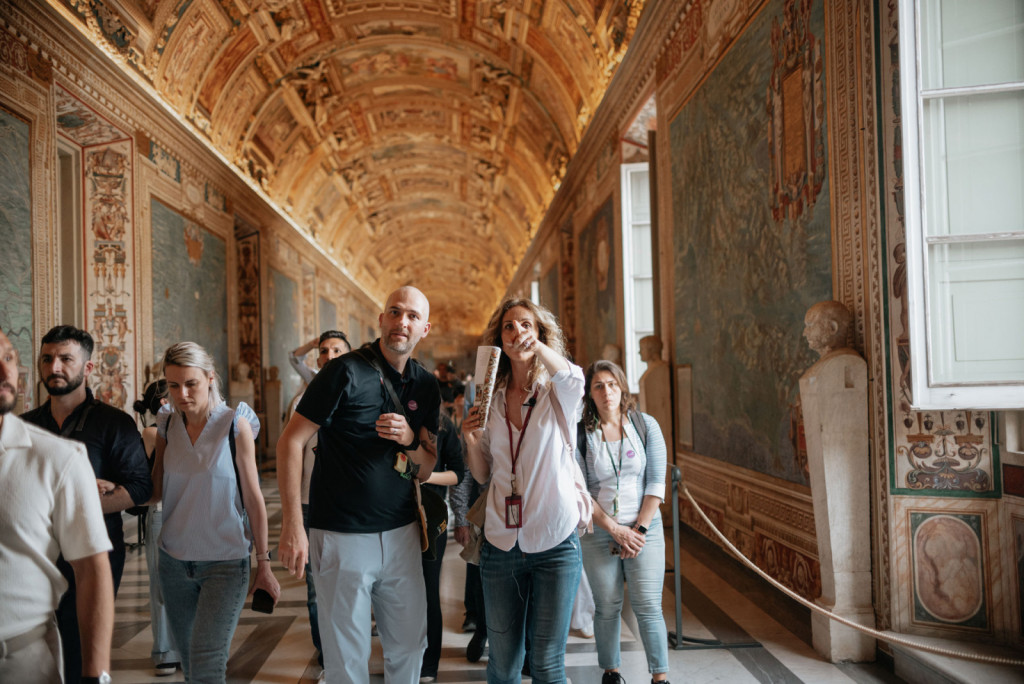
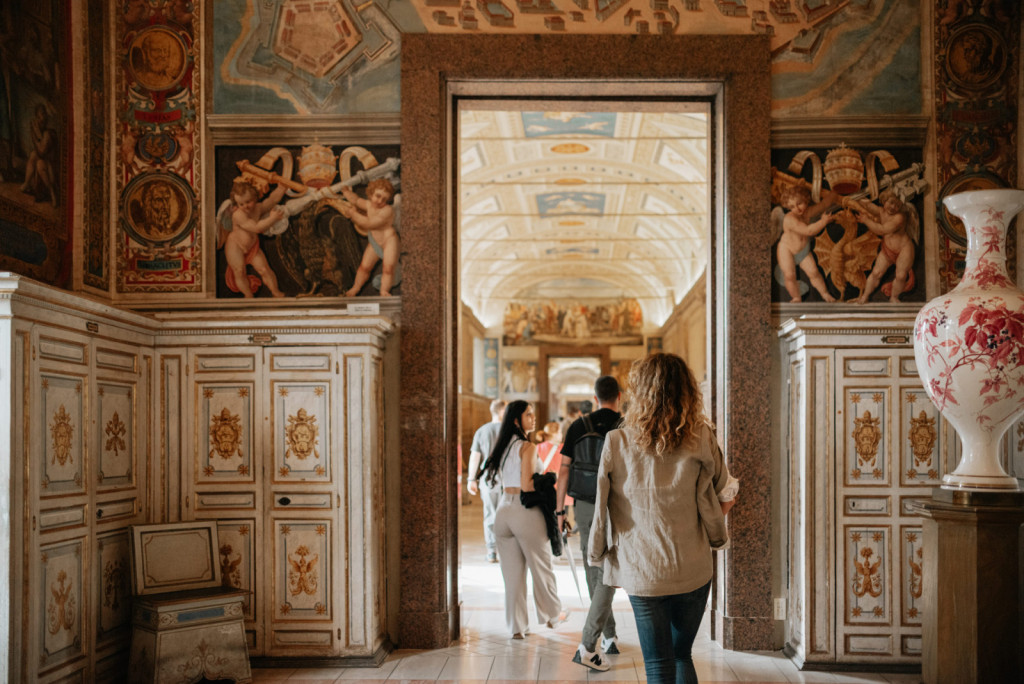
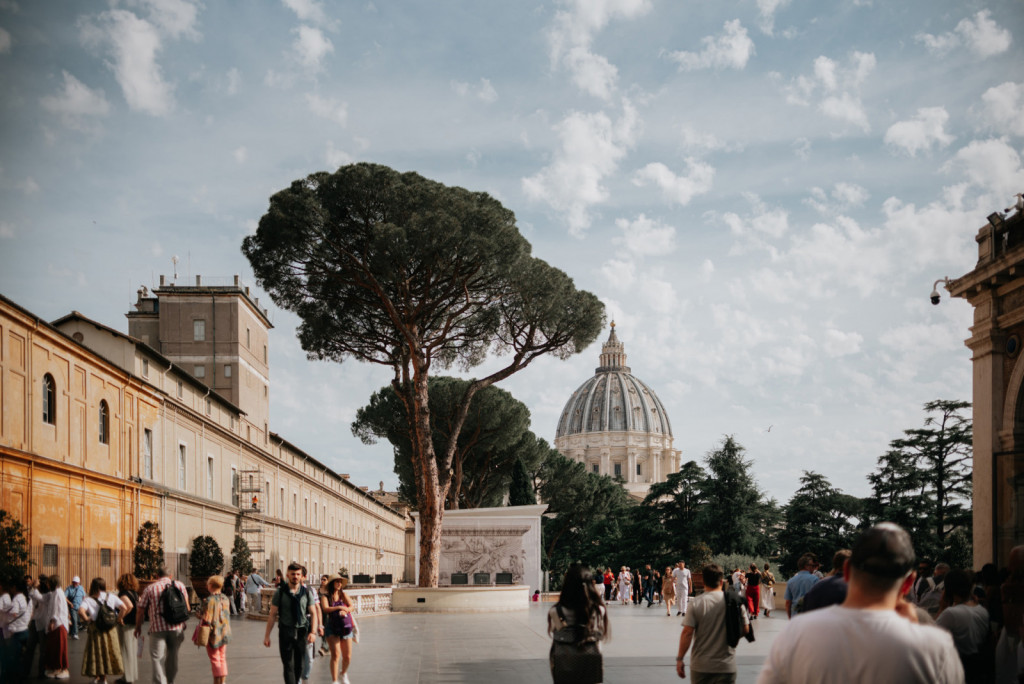
The Early Morning Vatican Tour enters the Vatican Museums as they open to the general public, ahead of the main crowds. An art historian guides you through the Gallery of Maps, the Belvedere Courtyard, the Raphael Rooms, and the Sistine Chapel while the corridors are still quiet. This is the version of the Vatican that most visitors never get.
For those who want the most exclusive experience available, the Unlock the Sistine Chapel tour enters the Vatican before public opening hours, following the Key Master through the galleries as he unlocks each room for the day. You open the heavy wooden doors of the Sistine Chapel and step inside before any other visitor, with an official Vatican guide who can explain every detail in a room that will be unrecognizable in an hour’s time.
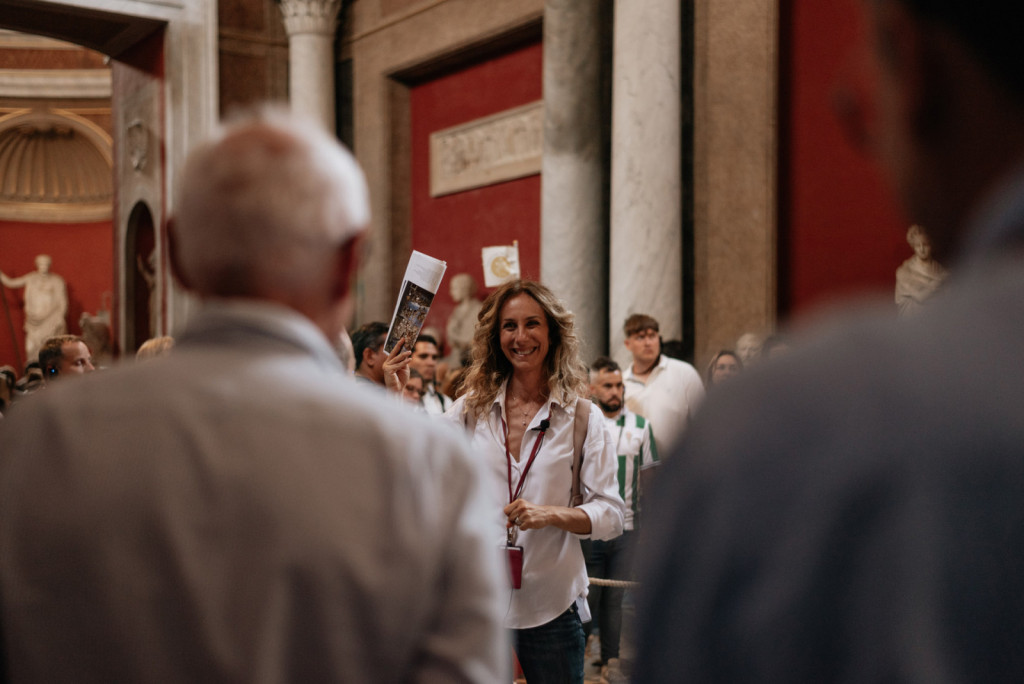
Both tours address the central problem of visiting the Sistine Chapel: you have limited time in a room that rewards extended attention, surrounded by hundreds of other people who are also trying to look up. A guide means you arrive knowing what to look for and leave having found it.
Sistine Chapel Guide: Practical Information
- Hours: Monday to Saturday 9am to 6pm, last entrance at 4pm. Closed Sundays except the last Sunday of each month when entry is free.
- Getting there: The Vatican Museum’s entrance is on Viale Vaticano. The nearest metro stations are Cipro and Ottaviano, both a 7-minute walk. There is no separate entrance for the Sistine Chapel.
- Dress code: Covered shoulders and knees required. Enforced at the entrance. Hats removed inside the chapel.
- Photography: Permitted throughout the Vatican Museums. Strictly forbidden inside the Sistine Chapel.
- Book in advance: Walk-up queues can run two to three hours in peak season. Book online before you go.
Is a Guided Tour Worth It?
Yes, for one specific reason. The Sistine Chapel gives you a fixed amount of time in a complex room. A guide who has briefed you on the ceiling layout before you enter means you spend your twenty minutes looking at the right things rather than figuring out what you are looking at.
The Early Morning Vatican Tour is the most practical option for most visitors. It combines smaller crowds, expert commentary, and a pace that allows you to actually absorb what you are seeing.
For the most extraordinary version of this visit, the Unlock the Sistine Chapel tour offers something genuinely rare: the chapel before anyone else arrives, with an official Vatican guide explaining every detail in a room that will be unrecognizable in an hour’s time.
FAQs: Sistine Chapel Guide
Can I visit the Sistine Chapel without going through the Vatican Museums?
No. The Sistine Chapel is accessible only through the Vatican Museums route. There is no separate entrance. Plan at least two to three hours total for the full visit.
Are photos allowed in the Sistine Chapel?
No. Photography of any kind, including phones and without flash, is strictly forbidden inside the chapel. Guards enforce this immediately. Photography is permitted throughout the rest of the Vatican Museums.
What is the best time to visit the Sistine Chapel?
The first entry slot of the day offers the lightest crowds. Early afternoon on weekdays is the second best window. Avoid Wednesdays, Saturdays in high season, and the last Sunday of the month when entry is free and crowds are at their largest.
What should I look for on the Sistine Chapel ceiling?
Start with the Creation of Adam near the centre of the ceiling, slightly toward the altar end. Find the prophet Jonah above the altar, dramatically twisted. Then look for the Libyan Sibyl to the right of Jonah. Before you enter, look at a labeled diagram of the ceiling so you know where the nine narrative scenes are positioned.
What is The Last Judgment and where is it?
The Last Judgment is Michelangelo’s second major work in the Sistine Chapel, painted on the entire altar wall between 1536 and 1541, more than two decades after he finished the ceiling. It depicts the Second Coming of Christ and the final judgment of humanity. Start here when you enter, before you look up, as it is easier to read at eye level.
Are you ready to explore the Sistine Chapel in person?
Make the most of your visit with a guided Vatican tours with WalksDevour. Discover Michelangelo’s Sistine Chapel, explore the Vatican Museums and see the masterpieces you might otherwise miss, with expert guides and options including early-morning and exclusive-access tours.