

The ancient city of Pompeii, frozen in time by volcanic ash. It offers visitors a uniquely immersive experience of walking through an excavated ancient Roman metropolis. It’s one of Italy’s most popular tourist attractions for a reason. But there are some important things to know before you hop on a train. In this Pompeii travel guide, you’ll learn about what to see in Pompeii, how much time you need for a tour, and why a Pompeii ruins guide is highly recommended for a more meaningful visit.

Pompeii’s History and What Makes It Unique
Pompeii was originally built on the Bay of Naples in about the 8th century BCE. The landscape has changed over the centuries, so the site is now almost half a mile inland. It was a thriving trade hub, with a large population estimated at 10,000 to 20,000 residents. In 79 CE, a catastrophic eruption of nearby Mt. Vesuvius buried the city in a fast-moving wave of ash, preserving it as if in amber.
The vast excavation site roughly 20 miles southeast of Naples gives visitors a rare chance to walk through an ancient Roman city on a grand scale that isn’t possible with smaller excavations in the middle of a modern city. What’s more, Pompeii was a bustling city with a large population across social strata. So, unlike the ruins on Rome’s Palatine Hill, the Archaeological Park of Pompeii offers a look at everyday life beyond the ruling classes.

What to See in Pompeii: The Must-See Ruins and Attractions
Our Pompeii travel guide starts with the ancient city’s must-see highlights. From grand villas and beautifully preserved frescoes to temples, theatres, public baths and the haunting casts of people caught in the eruption. Pompeii offers an extraordinary glimpse into everyday Roman life. Here are the sights and experiences you won’t want to miss on your visit.
Forum
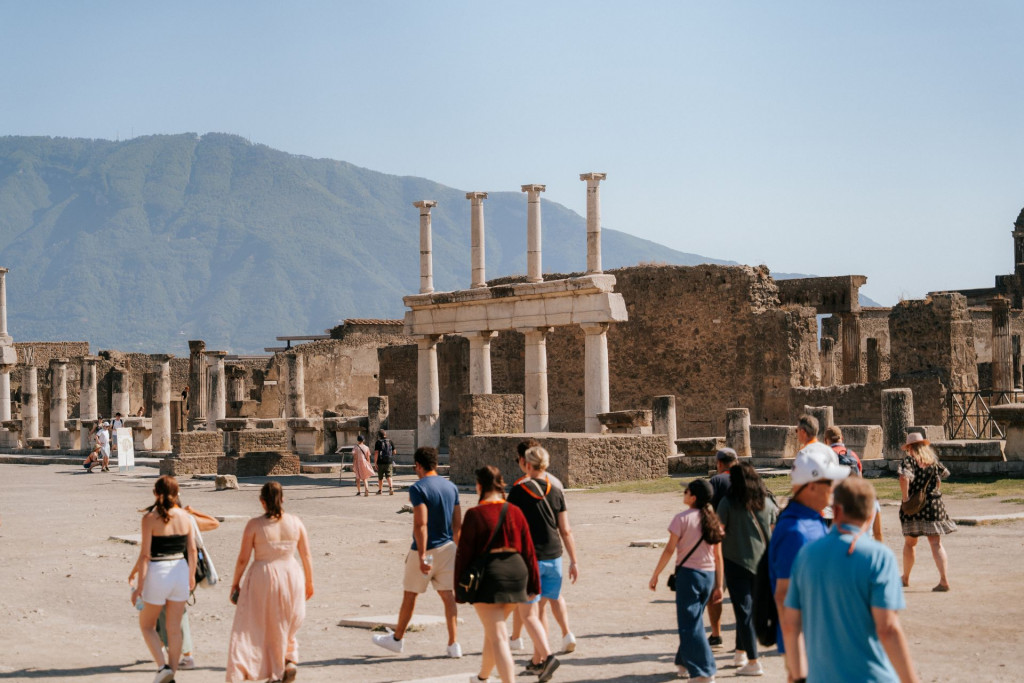
In an ancient Roman city, the forum served as the main public square. Lined with civic buildings and temples, Pompeii’s Forum is just that. It’s a large open space near the main entrance at Porta Marina. Some of the buildings facing the square are the Temples of Jupiter and Apollo. These were the city’s main government and judicial buildings, and a public food market.
Amphitheatre
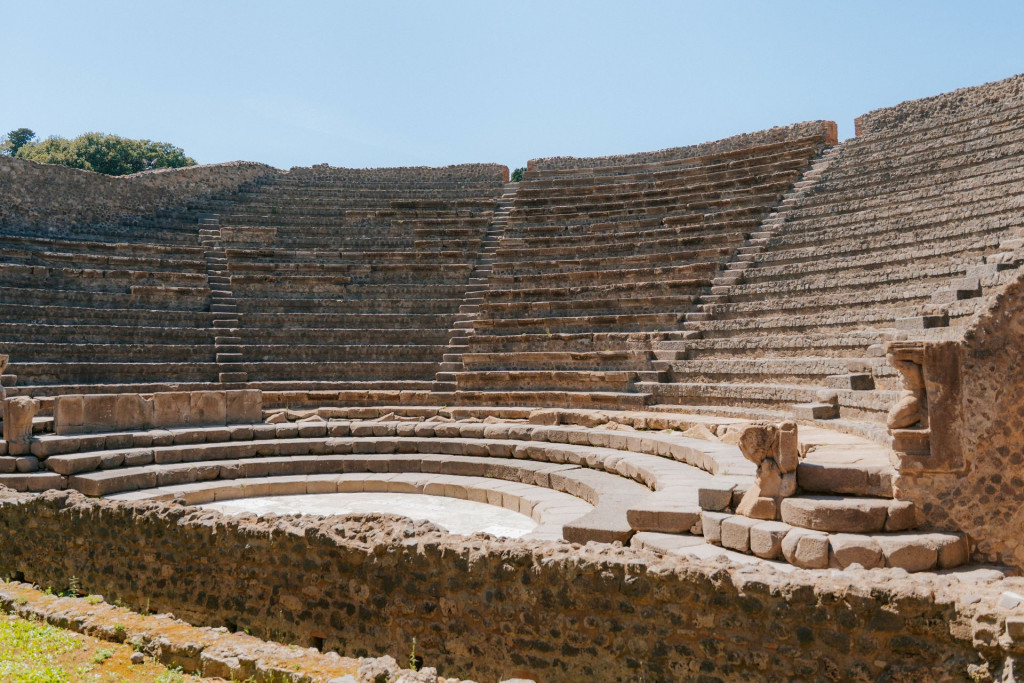
Built around 70 BCE, Pompeii’s amphitheatre is one of the oldest fairly intact Roman amphitheatres. Interestingly, the amphitheatre is still in occasional use today as a concert venue. It has hosted Pink Floyd, Elton John, Andrea Bocelli, Dream Theater, and James Taylor.
Villa of Mysteries
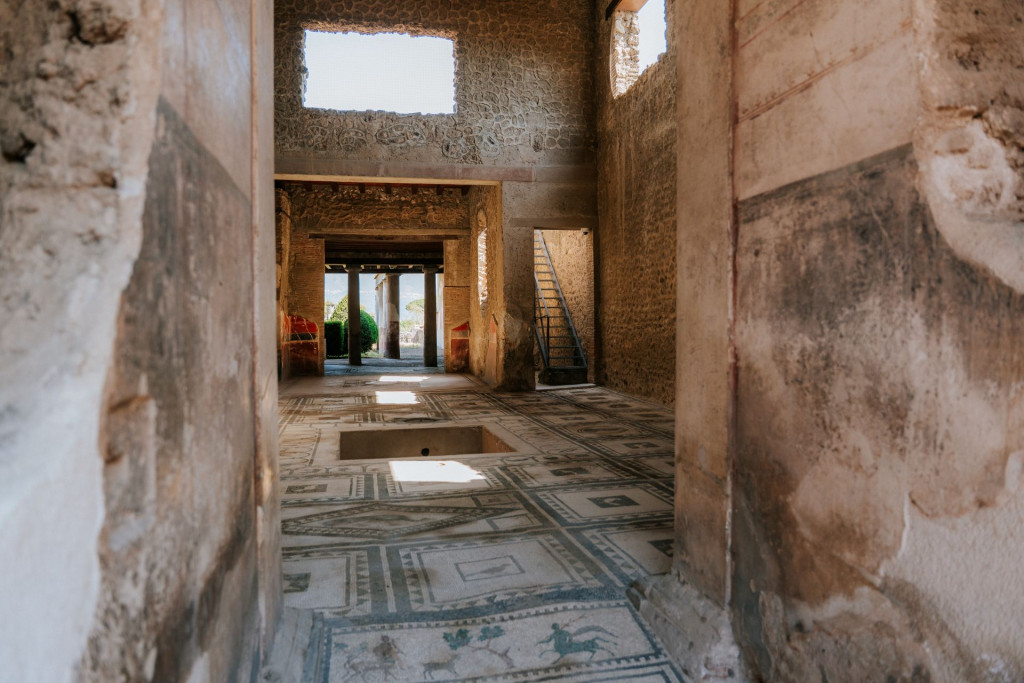
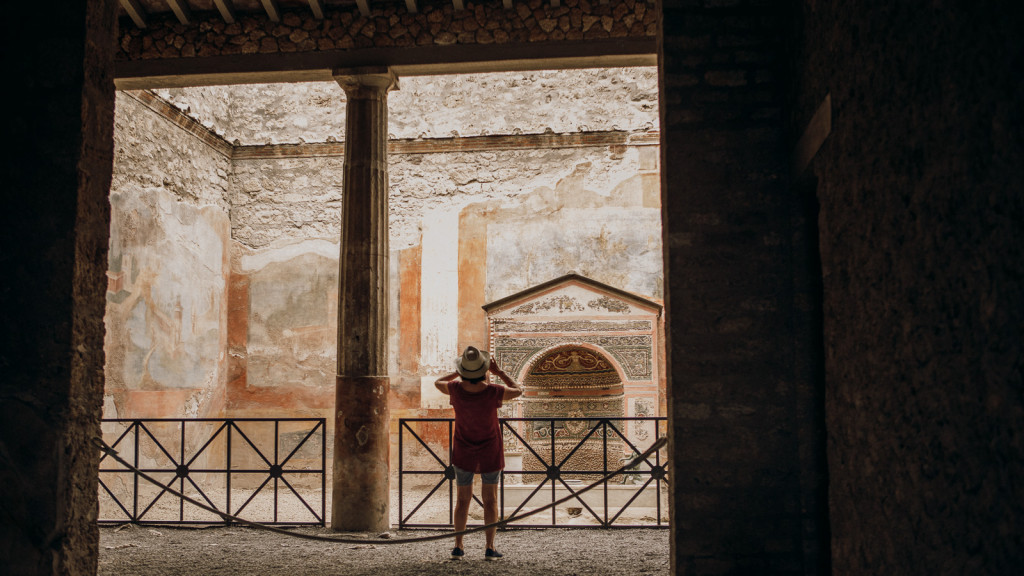
Just outside the main excavation site of Pompeii is the Villa of Mysteries. This large and beautifully preserved residence is home to exquisite colorful (and largely undamaged) frescoes. Many of the ceilings and floor mosaics also remain intact. This gives visitors a better sense of the ruins as lived-in structures.
Plaster Casts of Victims
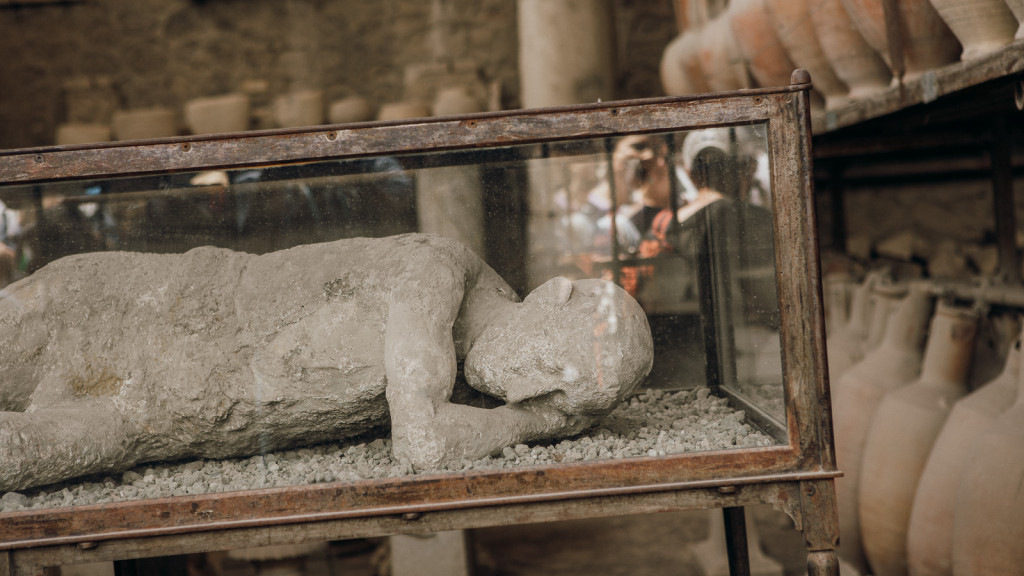
Human bones were discovered in the 19th century, hidden in small cavities of the hardened ash. Archaeologists filled the cavities with plaster, rendering casts of the bodies as they were when buried. There are two main locations on the site where you can see the plaster casts: the Antiquarium and the Garden of the Fugitives. In the latter, there are embracing figures, including adults shielding babies and children from the blast. The casts serve as a sobering reminder that Pompeii was a city full of people when disaster struck.
House of the Faun
Along with establishments frequented by the working class, there are also ruins of some private homes of Pompeii’s elite. The House of the Faun, so named for the small bronze statue of a faun found there, is the largest in the excavated site. The statue and many mosaics you see today are replicas—the originals are in the National Archaeological Museum in Naples.
Stabian Baths
Pompeii’s largest bath complex, the Stabian Baths, is among the oldest ancient Roman baths in the world. The complex included an exercise area, a swimming pool, a sauna-like room, and soaking pools with temperatures increasing from cold to tepid to hot.
Thermopolium of Region V
An ancient Roman thermopolium was essentially a deli counter where Romans without cooking facilities could pick up a to-go meal. More than 80 were found in the Pompeii excavations. One of the best-preserved ones not only has intact frescoes, but evidence of food remains were in the pots, including duck, goat, fish, and snails.
Lupanar
A remarkably well-preserved two-story structure. And one of Pompeii’s top attractions. Not just because so much of it survived the eruption intact, but also because it’s a bit taboo. The Lupanar is the largest brothel in the ruins. Experts believe the explicit frescoes and graffiti would have served as a menu of services. The popularity of the Lupanar means there’s often a line to get in. If you want to see it, go early!
How Much Time to Spend at Pompeii
When you’re thinking about how long to allow for a Pompeii visit, the main thing to keep in mind is the size of the site.
At its height, Pompeii covered a little more than 160 acres, roughly two-thirds of which have been excavated. That leaves a vast 44 acres’ worth of ancient ruins to explore entirely on foot. Just remember you won’t see everything in one visit, and it’s much less daunting.
INSIDER TIPS: Wear comfortable walking shoes. Bring a water bottle (there are water fountains for refills in several places). Make sure you have adequate sun protection – there isn’t much shade among the ruins. An umbrella is a great idea, for rain or shine!
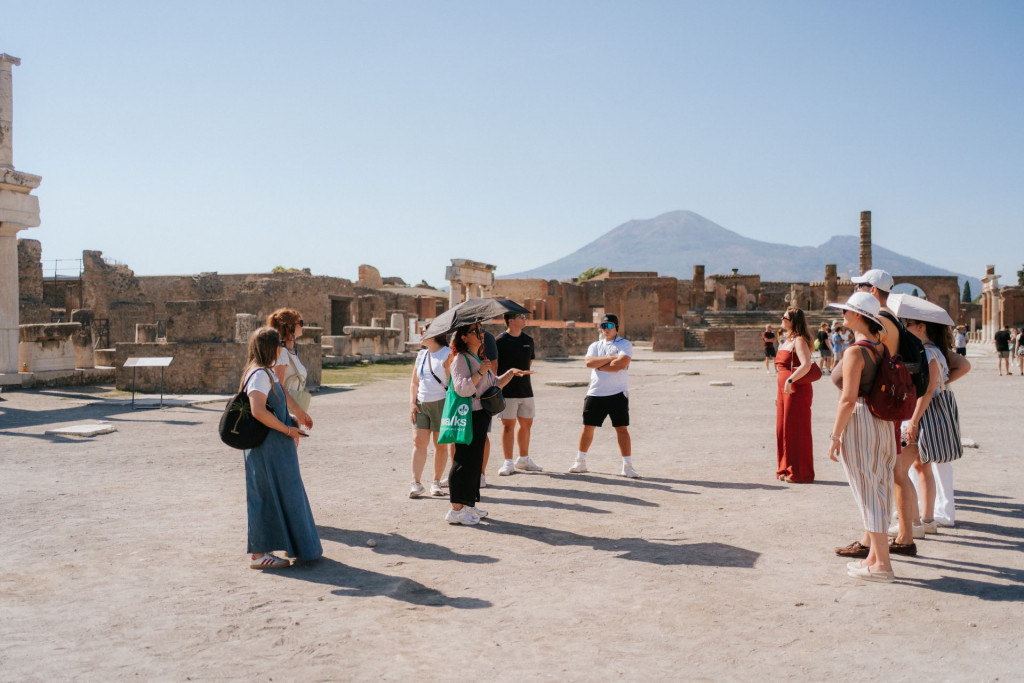
How a Guided Tour of Pompeii Improves Your Visit
You can do a self-guided tour of Pompeii. You can rent audio guides at the Porta Marina entrance, or download an audio guide app before your visit. But none of the self-guided options will bring the ruins to life the way guided Pompeii tours can.
There are several reasons to hire a Pompeii ruins guide:
- Tours include entry tickets, so you don’t have to book those separately.
- Guides are archaeologists who help you mentally reconstruct the rubble and put the site in historical context. They also point out little details you might otherwise miss.
- The site is massive. It’s easy to get lost if you do not know where you’re going.
- It’s more efficient. You’ll see more of the ruins in a shorter time than it would take you to cover on your own.
- Children often get more out of a tour with a live guide than a parent explaining things to them. There are tours that specialise in taking families with children.
- Private tours are available for a more flexible and tailored experience.
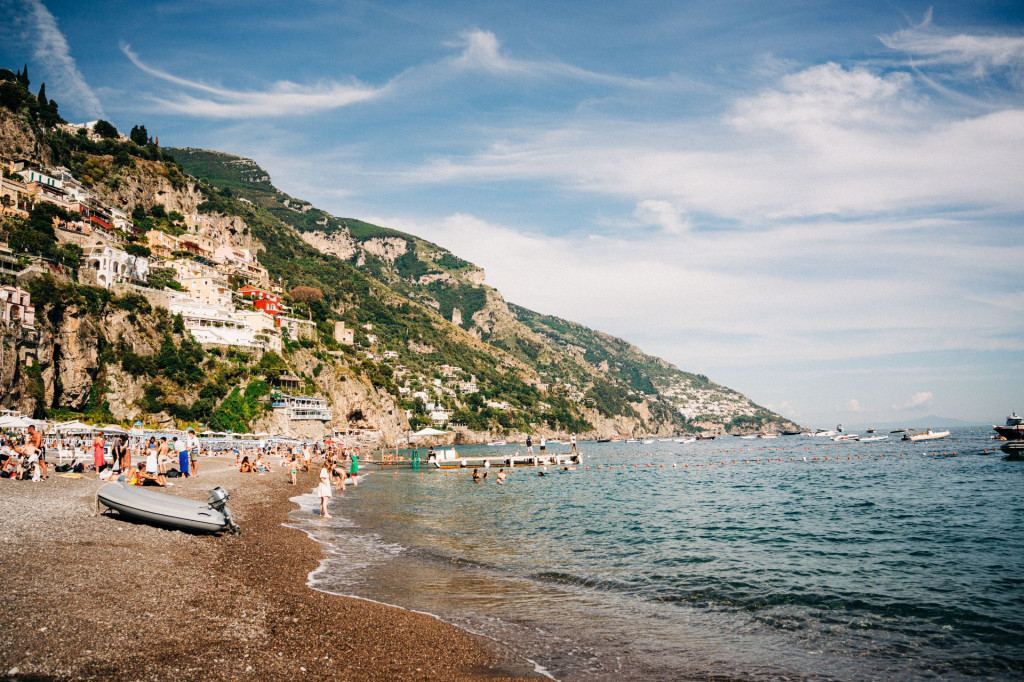
INSIDER TIP: Pompeii is a stone’s throw from the Amalfi Coast, making continuing on to the Amalfi Coast after a tour of the ruins a great itinerary.
Quick Tour of the Highlights: 2 hours
If you only have a couple of hours in your vacation schedule, you can still get a good look at many of Pompeii’s top attractions. With two hours, you could see the Antiquarium, Forum, Lupanar, Temple of Apollo, and the Stabian Baths.
Relaxed Tour of the Main Attractions: 3–4 hours
With 3–4 hours, you can see all the sites listed above without hurrying. You could also include the House of the Faun, Amphitheatre, Teatro Grande, and Garden of the Fugitives (depending on the route you choose). The average visit is 3–4 hours, especially for first-timers.
In-Depth Visit for the Archaeology Buffs: 5 hours or more
Setting aside a whole day to see Pompeii gives you the luxury of exploring everything listed above at your leisure. Plus the Villa of Mysteries, Thermopolium of Region V, and more houses and shops throughout the site.
Pompeii Ticket Options
While you can buy tickets at the entrance, there is a limit of 20,000 tickets allowed per day. These routinely sell out during the high season. Therefore, booking in advance is highly recommended.
Depending on what you plan to see during your visit, you can get a ticket that includes “suburban villas” like the Villa of Mysteries or only the city. But be aware, that you cannot exit and re-enter the site on a single ticket.
FAQs – Pompeii travel guide
How long should you set aside for a tour of Pompeii?
You can see many highlights of Pompeii in a well-planned two hours. However, most people (especially first-time visitors) should set aside 3–4 hours. If you do not have at least two hours, it’s probably not worth it.
What should you bring for a Pompeii visit?
You’ll be traversing uneven ground, so wear comfortable walking shoes. Carry a water bottle (you can refill it at several fountains throughout the site). Bring snacks, especially if you plan to stay in the park for more than a couple of hours. And, in sunny weather, sunscreen and sun gear are imperative.
What’s the best time to visit Pompeii?
There’s little to no shade throughout the site, so the heat can be oppressive during the peak summer months. Spring and fall are the best seasons to visit, and, even then, you’ll want to avoid the heat of midday. Regardless of the season, if it’s sunny, wear sunscreen and bring protective gear. A wide-brimmed hat and a long-sleeved shirt are a good idea.
Are there places to eat at Pompeii?
There are a couple of cafes inside the park itself, but don’t expect anything special. You cannot bring meals in, but you can bring snacks. There are picnic areas inside the gates, so locate those when you want to take a refreshment break. Afterall, it is an archaeological site, so you can’t just sit down anywhere to eat. Better dining options are outside the park, so if you want a full meal, try to eat before or after your tour. Remember, you can’t leave and re-enter the site on the same ticket.
Is Pompeii family-friendly?
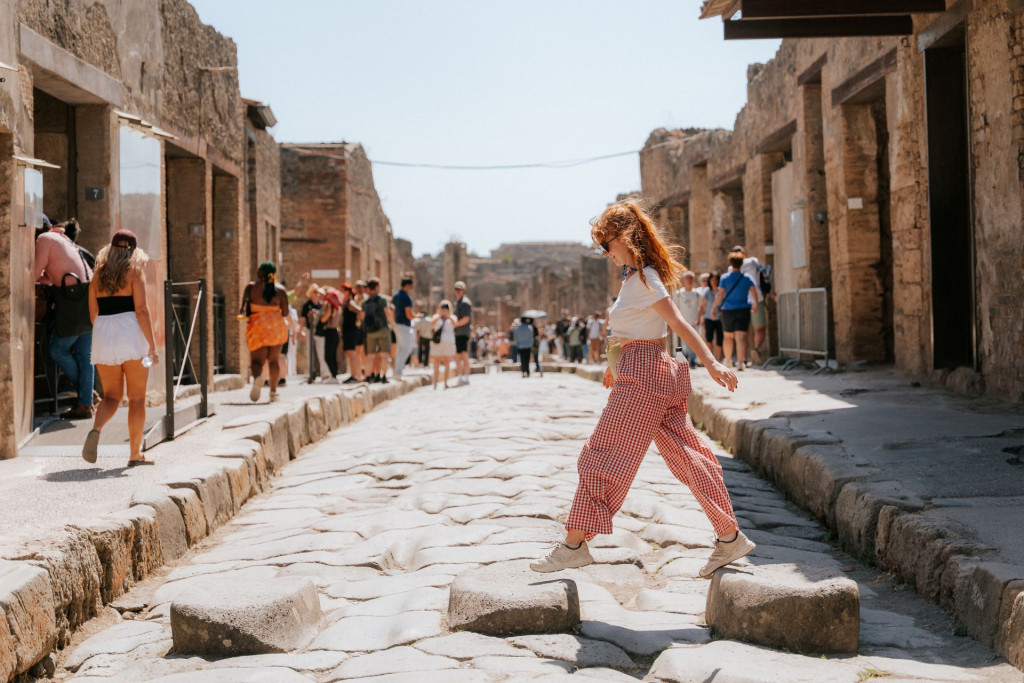
Pompeii is a great place for kids to experience history in a more tangible way than in a classroom. The rubble may make it difficult for children to understand what they’re seeing, however, so a good tour guide makes all the difference. Also, keep in mind that most of the site isn’t stroller-friendly, the cobblestone streets are uneven and bumpy.
Is Pompeii accessible?
Certain areas of the excavations have been made more accessible for visitors with impaired mobility or families with strollers. An accessible route indicated by the dotted blue line on the official Pompeii map includes the main attractions. Accessible buildings are also marked with a blue dot on the legend and the map. Read more about “Pompeii for All” on the park website.

Ready to explore Pompeii?
Pompeii is one of Italy’s most fascinating archaeological sites, but having a guide can help bring its streets, homes and ancient inhabitants to life. Whether you want a private experience, a small-group tour or a visit combined with other highlights in the region, there are plenty of ways to explore.
Explore our Pompeii tours and choose the experience that’s right for you!