
Rome wasn’t built in a day…as the famous saying goes! And you certainly can’t see all of it in 24 hours. But if one day in Rome is all you have, don’t worry! You can still experience a host of the Eternal City’s most iconic sights and get a real taste of Roman life. The trick is knowing what to prioritize and how to make the most of your time.
This 24 hour guide takes you on a full day of Roman exploration. From the Pantheon and Piazza Navona to the Vatican, Colosseum, Roman Forum, and Trastevere neighbourhood. With plenty of opportunities to wander, stop for a coffee, admire the scenery, and enjoy a memorable Roman meal along the way.
One day in Rome: Itinerary Suggestions
Here is a suggested itinerary of the key sights you will want to fit into your schedule. You can follow the route independently, or let an expert take care of the planning.
Early Morning in Rome:
Sipping an Espresso Italian Style
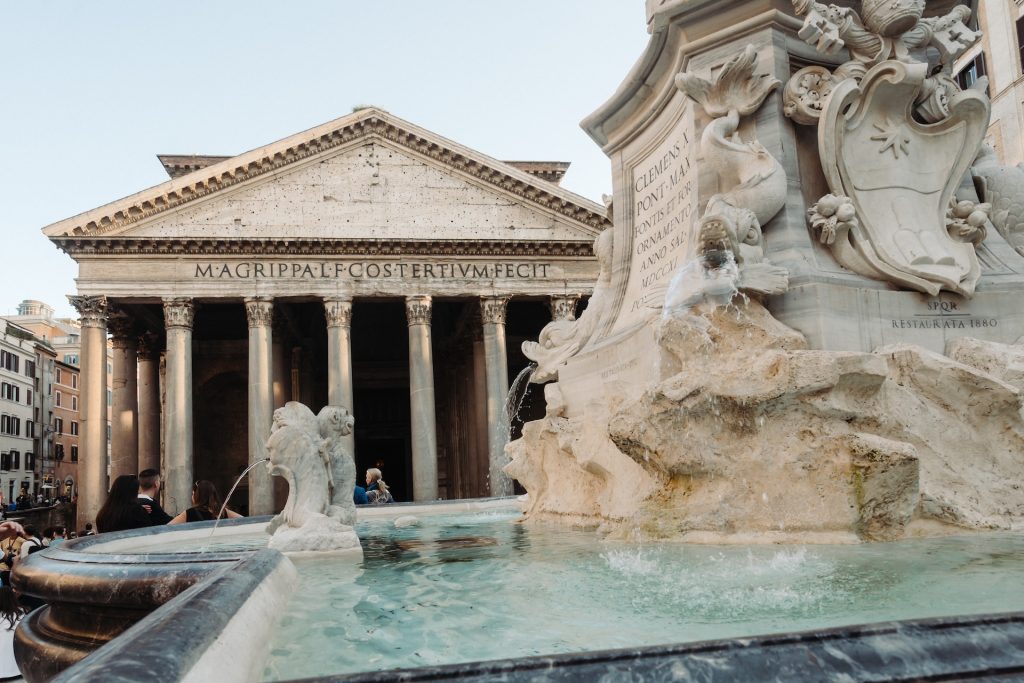
Start your day smack in the center of Rome, right in the belly of the beast at Piazza della Rotonda, standing in front of one of the world’s greatest remnants of antiquity: the Pantheon.
But before starting your visit to the sights, head over to La Tazza d’Oro. This bustling coffee bar has been pulling perfect shots of espresso since 1946. And it isn’t just an ordinary Roman coffee bar – it’s a torrefazione! This means they also roast their own coffee beans here. So, you’ll get a cup that’s as unique as the spot you’re sipping it in.
Insider tip: Be like a real Roman. Pay for your espresso (and perhaps a croissant – or cornetto, in the local lingo) at the register. Then hand your receipt to the barista, and stand at the bar while sipping away. This is how the Italians do it… and you pay more if you choose to sit at a table .
Perusing The Pantheon
After your coffee, stroll over to the Pantheon, Rome’s magnificent “temple of all gods.”
Here’s the fun part: the building you see today isn’t actually the original. Marcus Agrippa built a temple on this spot in the 1st century BC, but after it was destroyed, Emperor Hadrian rebuilt it in the 2nd century AD. Hadrian even kept Agrippa’s name on the façade, a little nod to the building’s long history.
Step inside and you’ll see the resting places of various famous Italians, including the painter Raphael. But the real spectacle is looking up at the enormous dome and its famous oculus, the open hole at its center. Sunlight streams through it, illuminating the mosaic floor below. And yes, when it rains, it rains inside the Pantheon too! Water falls through the oculus and drains away through tiny holes in the floor, just as it has for centuries.
Late Morning in Rome:
Perambulating the Piazzas
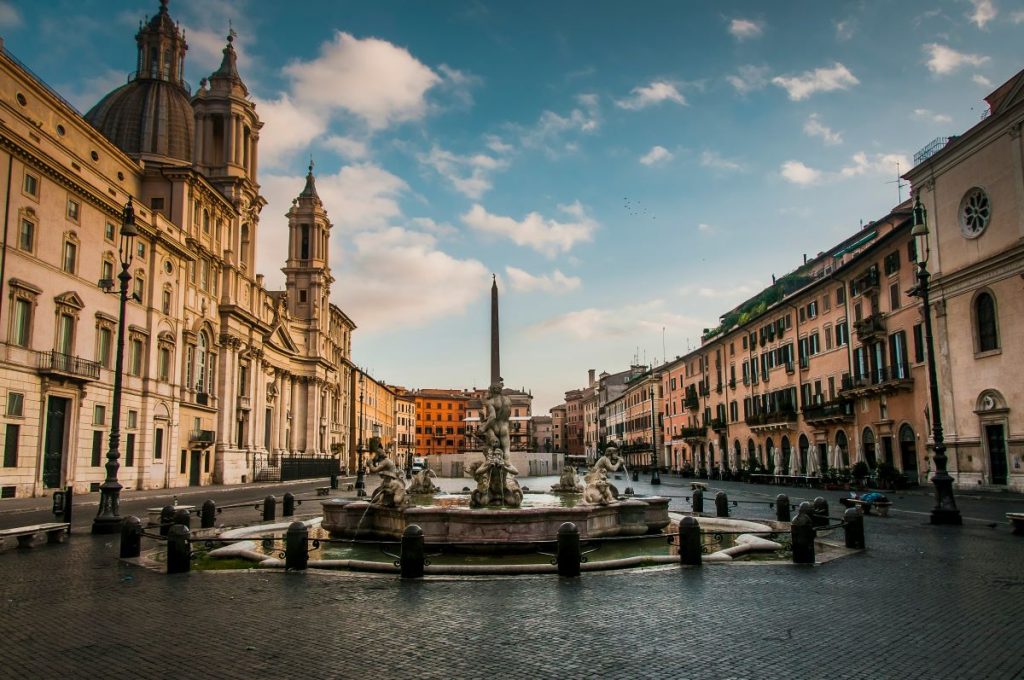
From here, just a 10-minute or so amble through the streets or Rome and you’ll be at one of the world’s great public spaces: Piazza Navona. This oblong-shaped square gets its form from the fact that in ancient Roman times the space was a circus. (Although, not the kind of “circus” that 21st-century humans would think of.) It was a race track for athletic competitions. In the year 86 CE, Emperor Domitian had it created and it could hold up to 20,000 spectators.
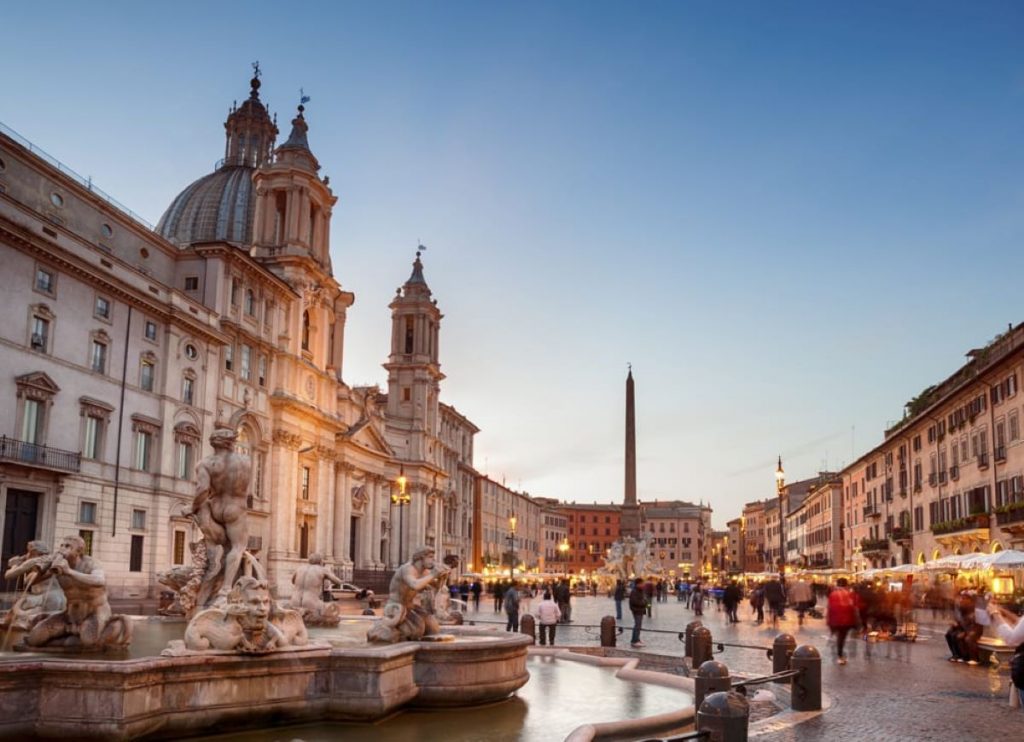
Today, Piazza Navona has an abundance of outdoor cafes that invite locals and visitors alike to pull up a chair for a spot of people watching. However, the square itself is full of eye-popping fountains that you will want to see up close.
The centerpiece (both literally and figuratively) is Bernini’s masterpiece, “La Fontana dei Quattro Fiumi,” . This fountain was dedicated to the world’s four great rivers in the middle of the 17th century – the Nile, the Danube, the Ganges, and the Rio de la Plata in South America. In the center is a 50-foot Egyptian obelisk that once stood proudly in the Roman-era Circus Maxentius on the Appian Way.
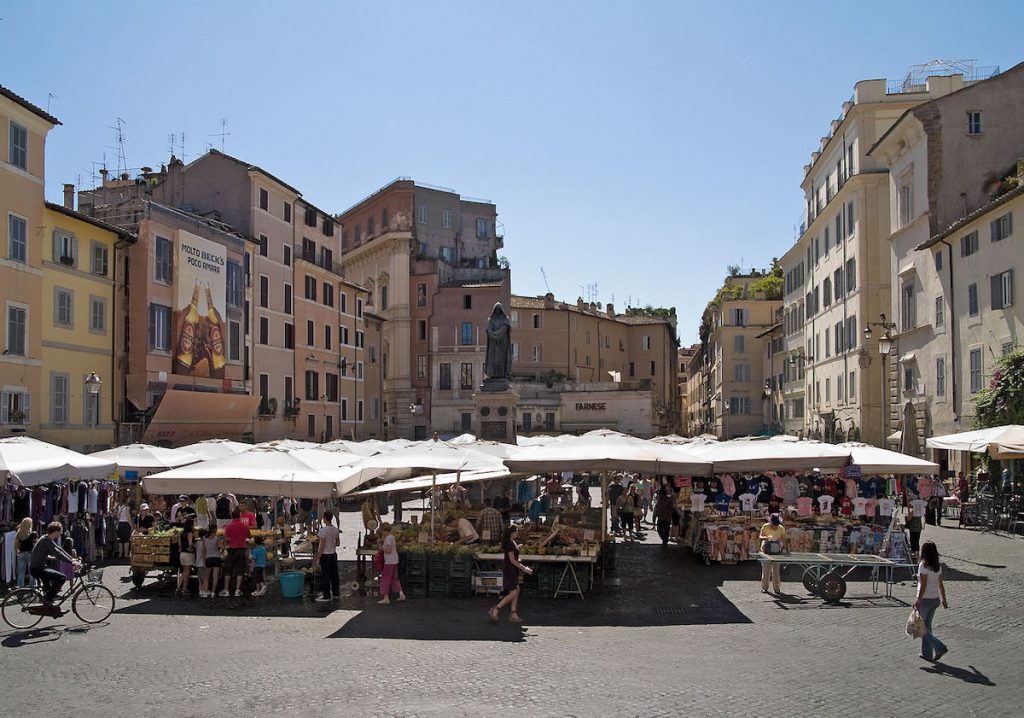
If you have time, walk south about five minutes, crossing the sometimes busy Corso Vittorio Emanuele II until you reach Campo dei Fiori. This intimate square feels less planned than Piazza Navona. It doubles as the main farmers market in Rome’s historical center. Today, though, there are also souvenir stands among the vegetable and fruit sellers. It’s still one of the most inviting squares in the city.
Lunchtime in Rome:
Eating like a local
For lunch, you’ll have plenty of good options around Campo de’ Fiori. For a quick and typically Roman meal on the go, look for a pizza al taglio (pizza by the slice), supplì (fried rice croquettes), or a trapizzino, a pocket of pizza dough stuffed with Roman-style fillings. If you have more time, settle into a traditional trattoria for pasta such as carbonara, amatriciana, or cacio e pepe. You could also pick up some fresh ingredients or prepared foods at the market and have a picnic, before making your way west towards the Vatican.

Early Afternoon in Rome:
Visiting The Vatican
After lunch, it’s time to head to see the Vatican. This 108-acre city-state is one of the chief sites to see if you only have a limited time here.
Vatican Museums
To be honest, it’s a lot to ask of anyone with only one day in Rome to attempt visiting the Vatican Museums, partly due to long wait times for entry… That is, unless you pre-booked your ticket, or you are joining a guided tour, like the Vatican Express Tour!
St. Peter´s Square
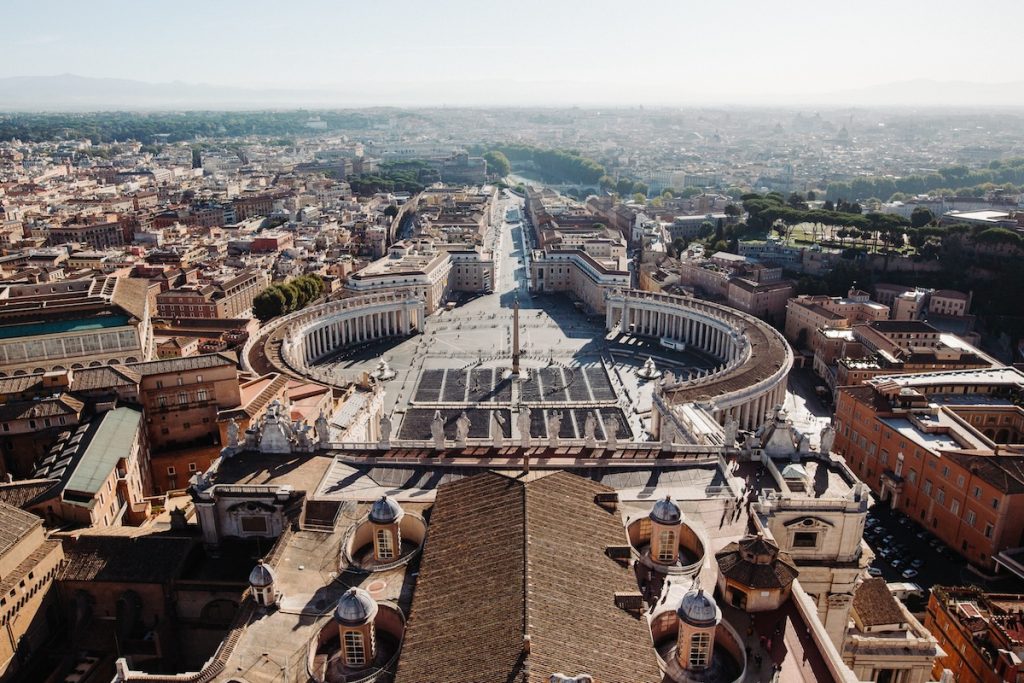
For those who decide against spending a few hours inside the museums, your time is best spent wandering around the grandiose St. Peter’s Square. The two arms of colonnades, complete with 284 columns, are an impressive sight. It is like they are reaching out to embrace each and every visitor. And then, to the cherry on the top is the amazing Michelangelo’s dome of St. Peter’s Basilica.
St. Peter´s Basilica
The Basilica of St. Peter, the architectural cherry crowning Vatican City, was completed in the early 17th century, exactly 1,300 years after the first St. Peter’s was completed on this site.
An all-star team of legendary Renaissance and Baroque architects and artists gave a hand in building the “new” St. Peters, including Bramante, Michelangelo, Raphael, and Bernini. There’s often a security line to get into St. Peter’s but it goes quicker than you think. And it is worth the wait to go inside.
Interior highlights that can’t be missed are Michelangelo’s “Pieta” and Bernini’s monumental brass “Baldacchino,” a 100-foot tall “canopy” that serves as the focal point of the church. Most of the brass, by the way, came from the roof of the Pantheon, just as ample amounts of marble to make St. Peter’s were stripped away from the Colosseum.
Late Afternoon in Rome:
Stepping back in time to Ancient Rome
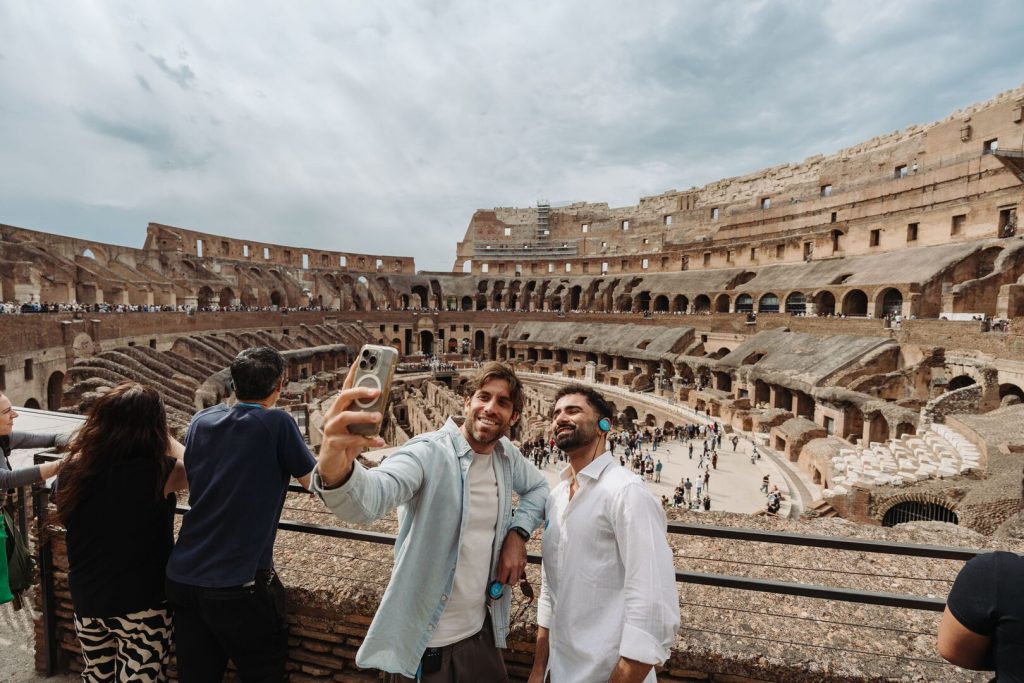
Last but not least, it’s time to take a trip to one of the most iconic sights of Ancient Rome, the Colosseum. The quickest way to do that is by taking the Metro from the Vatican. Hop on at Anagnina station and take line Termini, changing to the B line (toward Laurentina) and exiting the Metro at Colosseo.
The Roman Forum
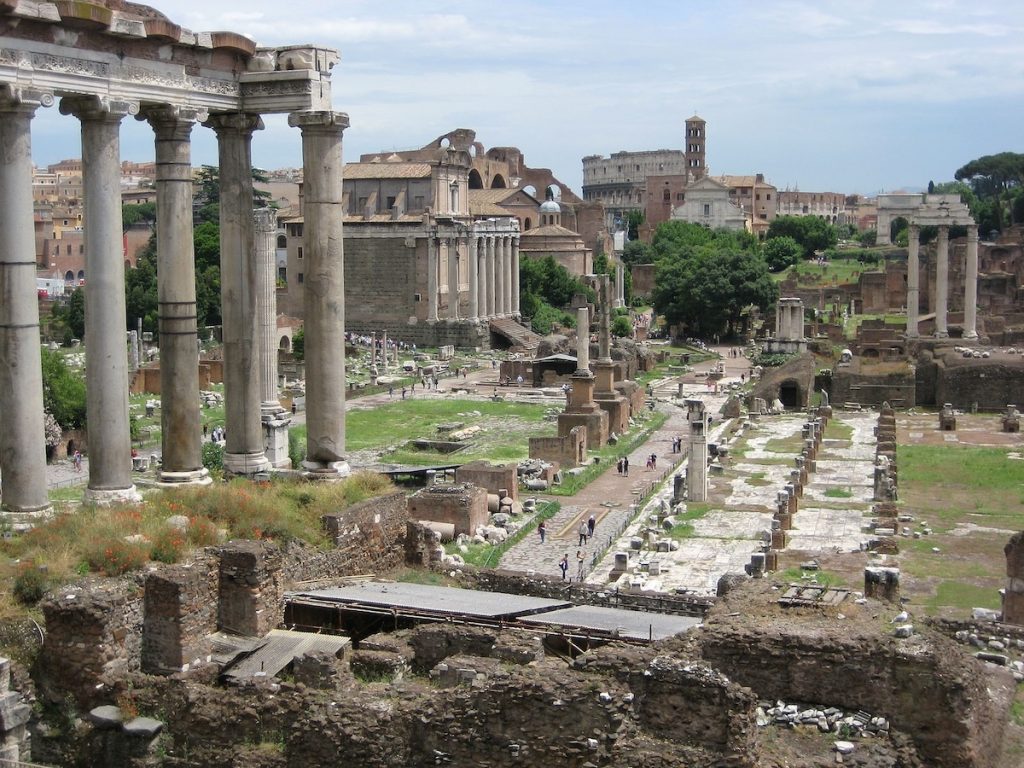
This ruin-studded swath of land, known as the Roman Forum, was the very center of Roman power for centuries and the symbolic heart of the empire. Temples and courthouses and administrative buildings and arches filled the area. After the fall of the empire in the 5th century CE, the area became a quarry for marble. This is why today the patch of land is just marble stumps of its former self. A junkyard of marble. There is still plenty to see, though. Marble arches, such as the arch of Titus, commemorating the 1st century CE sack on Jerusalem. In addition, standing columns from various temples, create an atmospheric stroll throughout what once was the center of the known world.
The Colosseum
Again, if you haven´t pre-booked, then the line might be too long to get into the Colosseum if you only have one day in Rome. The good news is that seeing this nearly 2,000-year-old iconic structure from the outside is extremely satisfying.
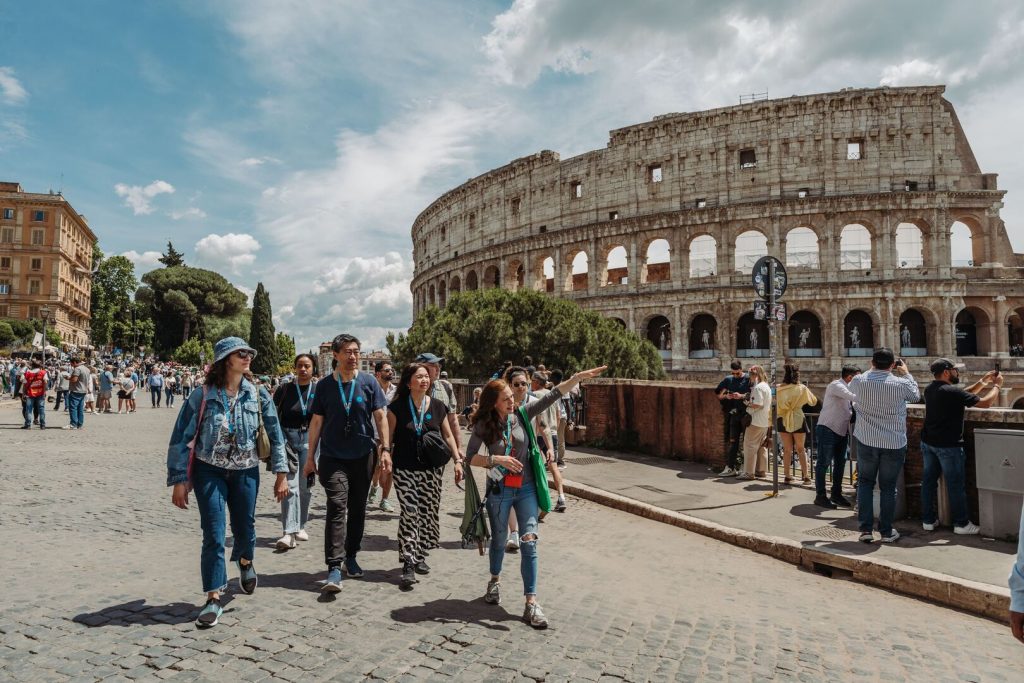
In its prime, this stadium could hold over 50,000 Romans. People would watch men take on each other as well as slaughter ferocious animals. In the first 100 days of the stadium’s inauguration, 5,000 beasts were slaughtered, much to the enjoyment of the masses. Thanks to its ingenious design and the many “vomitoria,” or exits, the Coliseum could be emptied within 10 minutes. All the fun ended with the fall of the Roman Empire in the 5th century. By the Middle Ages, the Coliseum was viewed simply as a quarry for marble, like vultures picking away at a dead carcass.
If visiting the Colosseum is a priority for you on your one day in Rome, check out the range of different guided tours available. You can select skip-the-line access, so you can circumvent that long line too!
Evening in Rome:
Drinking & Dining in Trastevere
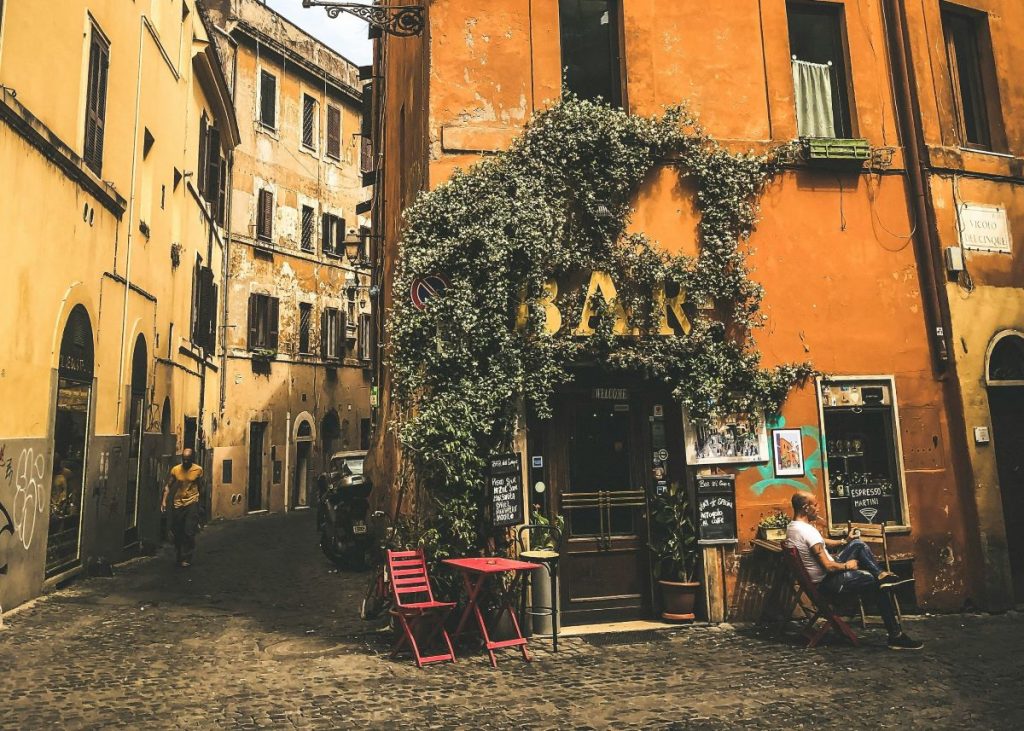
Ask a Roman to name a favorite neighborhood in the center of town and you’re likely to hear Trastevere. This neighborhood, beloved for its charm and timelessness, literally means “across the Tiber.”
Trastevere has long been one of Rome’s most distinctive neighborhoods. A maze of narrow streets, ivy-covered buildings, and lively piazzas. Today, it’s a favorite spot for an evening stroll, aperitivo, and dinner, when the neighborhood really comes alive.
Sightseeing Ideas
If you get here in time for some sightseeing, there are a few not-to-be-missed places: Pop into the church of Santa Maria in Trastevere, said to be the first official place of worship for Christians in Rome. And also don’t miss the church San Francesco a Ripa, which houses the Bernini sculpture, “The Ecstasy of Beata Ludovica Albertoni,” one of the artist’s most breathtaking works.
If not, though, there’s plenty of fun leisure in Trastevere: wandering the curvy narrow streets, plonking down at a bar to people watch while sipping a glass of wine.
Dining Recommendations
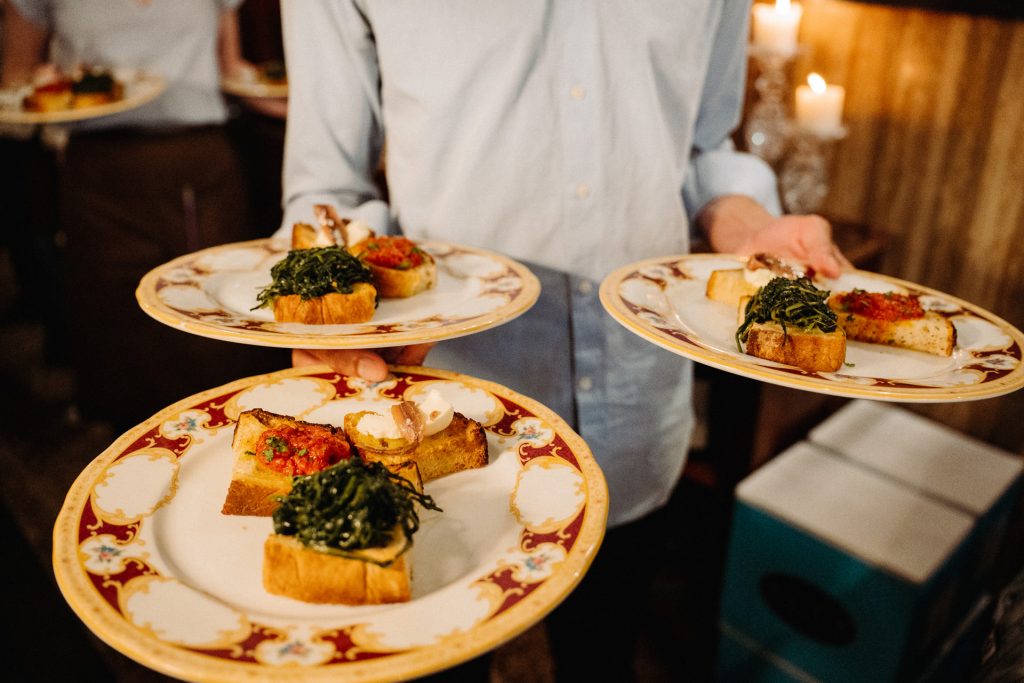
Consider getting dinner here, as there are plenty of great restaurants. There is the no-frills Trattoria da Augusto, at Vicolo di’ Renzi 15, where they add up your bill on the paper tablecloth. Or the classic trattoria Da Enzo al 29, where you’ll get one of the best versions of the Roman staple, carbonara. Or why not treat yourself to the Michelin-starred Glass Hostaria, where chef Cristina Bowerman puts her stamp on a menu of Southern-meets-Central Italian fusion fare.
And if you want something more organized, consider a guided tour of Trastevere’s best restaurants and wine bars at sunset.
FAQs – One day in Rome
What should I book in advance for one day in Rome?
Book your tickets for major attractions such as the Colosseum and Vatican Museums ahead of time. If you’re want to take a guided tour or have a particular restaurant in mind, reserve those too. This lets you spend your limited time sightseeing rather than waiting in line. And you can work the sights around you pre-booked activities.
Where should I stay if I only have one day in Rome?
Choose accommodation in or close to the historic center so you can walk to as many sights as possible. Areas around the Pantheon, Piazza Navona, Campo de’ Fiori, or Monti are convenient for a short visit. Staying centrally may cost more, but the time you save getting around can be worth it when you only have 24 hours.
What should I bring for a day of sightseeing in Rome?
Wear comfortable shoes, you’ll be doing a lot of walking on cobblestone streets and uneven pavements. Bring a refillable water bottle, sunscreen, and a light rain jacket or umbrella depending on the season. A small bag is also useful for carrying essentials, but check attraction rules before bringing larger bags.
Make the most of your 24 hours in Rome
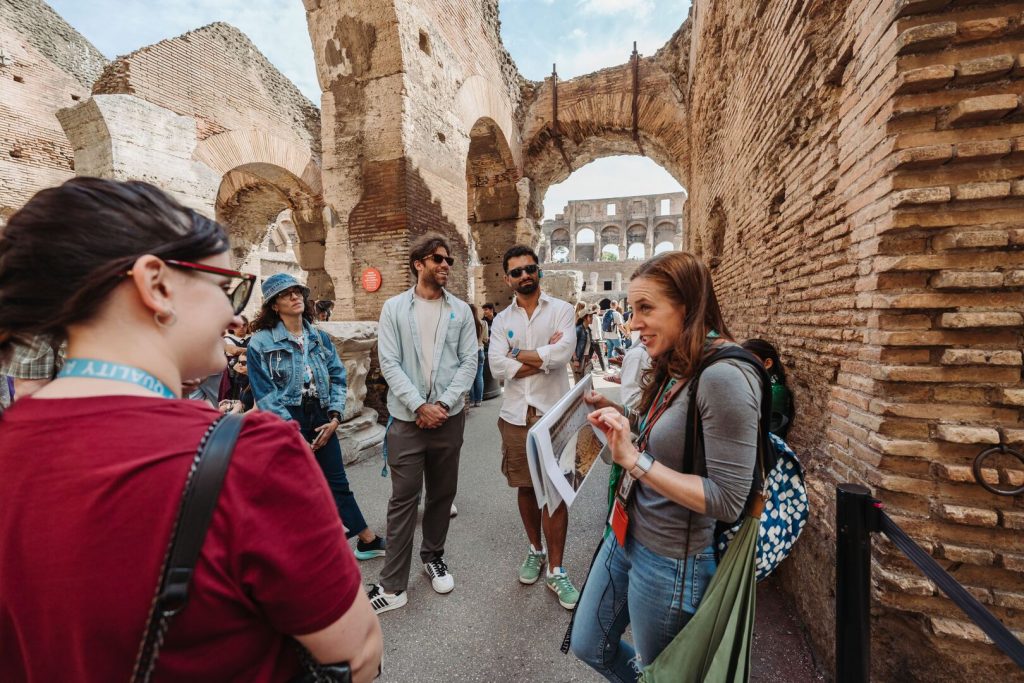
When you only have one day in Rome, every hour counts. A guided tour can take care of the logistics, help you skip the longest lines, and connect several major sights in a single, well-planned itinerary, all while giving you a local expert to bring the city’s extraordinary history to life. Instead of spending your precious time figuring out where to go next, you can concentrate on enjoying Rome.
Ready to make every minute count? Explore Walks of Italy’s Rome tours and find a guided experience that fits your schedule.